iPhone vs DSLR for Listing Photos in 2026
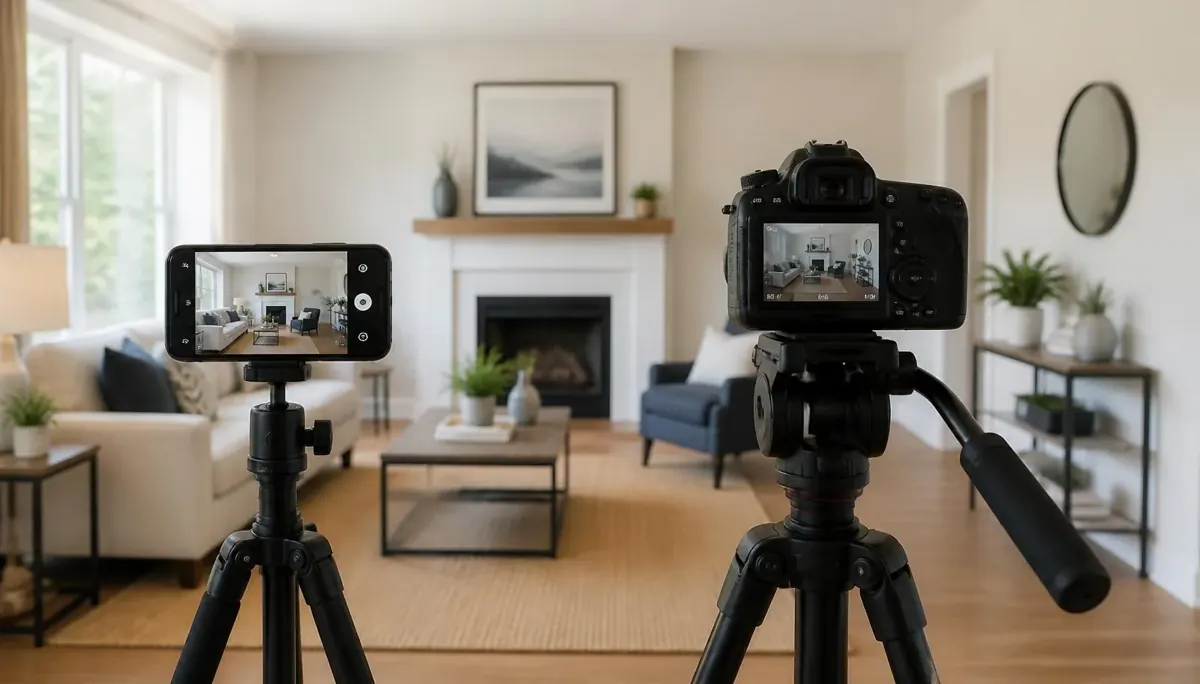
The honest answer in 2026 is that the camera matters less than the tripod, the light and the editing. A current phone in disciplined hands beats a DSLR used carelessly, every time. But there are specific situations where a dedicated camera still produces a result a phone cannot, and it is worth knowing exactly which ones before you spend anything.
What a modern phone does well
Phone sensors are small, but the computational pipeline around them has closed most of the gap for the kind of photographs listings need.
Dynamic range is the big one. A current flagship captures a bright window and a shaded interior in a single frame and merges them automatically, which is the exact problem that used to force agents into bracketing. For an average room with one or two windows, the result is usable straight out of the camera.
Phones are also fast, always in your pocket, and instantly shareable, which in practice means listings go live sooner. A set shot the same afternoon at 85% quality beats a photographer's set that arrives on Thursday.
Where phones genuinely hold up: standard rooms in daylight, kitchens, bathrooms, exteriors on an overcast day, detail shots, and anything destined mainly for portal thumbnails and social.
Where a camera still wins
Four situations, concretely:
Very low light. A dim basement, a north-facing room on a gray afternoon, an evening interior. The phone will produce it, but noise reduction smears texture — carpet, wood grain and brick turn into soft plastic. A larger sensor keeps detail.
Twilight exteriors. The signature dusk shot, with warm interior lights against a deep blue sky, needs long exposures and clean shadows. This is the clearest gap.
Very wide interiors without distortion. A phone's ultra-wide stretches the edges of the frame noticeably. A 16-24mm lens on full frame gives the same coverage with straighter geometry, which matters in small rooms where furniture sits near the edges.
Big prints and premium listings. If images run in a magazine spread or a large brochure, file size and detail still favor a camera.
Full manual control. Locked exposure, locked white balance and locked focus across a bracketed sequence produce a set that edits consistently. Phones allow much of this now, but less reliably.
The gear that actually changes your photos
If you have a budget and are choosing between a better camera and better support, buy support. In rough order of impact per dollar:
- A tripod. It fixes camera height, keeps verticals straight, and makes bracketing possible. Nothing else comes close.
- A bubble level or the on-screen level. Free, and it eliminates the most visible amateur tell.
- A remote or the two-second timer. Removes shake at the moment of capture.
- Two lights or a bounce flash. For interiors that daylight cannot reach.
- Then a camera body and a wide zoom.
An agent shooting with a phone on a $60 tripod at a consistent 50-inch height produces a more professional set than the same agent handholding a $2,500 camera at eye level.
Settings that matter, whichever you use
On a phone: lock exposure and focus by pressing and holding on a mid-tone area of the room. Use the main 1x lens where possible and step back rather than switching to 0.5x. Turn HDR on. Shoot in the highest-quality format your phone offers, and turn off any beautification or scene enhancement that alters color. Clean the lens — it is smeared more often than you think.
On a camera: aperture between f/7.1 and f/9 for depth of field without diffraction softening, ISO at base (100 or 200), shutter as long as the tripod allows, white balance set manually rather than auto so the whole set matches, and RAW capture. Bracket three to five frames two stops apart for any room with a window.
For both: shoot at chest height, roughly 48-55 inches, and keep the camera level.
The step that decides the outcome
Whichever device you use, the finished photograph is made in editing. The same room, captured on a phone and on a full-frame camera, looks far more similar after correction than before it — because correction is fixing the same four things in both files: exposure balance between window and room, perspective and verticals, white balance consistency across the set, and shadow detail.
This is also where most agents lose the comparison. A camera produces a flat RAW file that looks worse than the phone's processed JPEG until it is edited. If you buy a camera and skip the editing step, your photos will get worse, not better.
So which should you use?
Use your phone if you list mainly standard homes and condos, shoot in daylight, need images live the same day, and have not yet bought a tripod. Spend the money on support and editing instead.
Use a camera if you shoot twilight exteriors, luxury listings, large or dim interiors, or high volume where consistency and manual control across hundreds of frames saves real time.
Hire a photographer if the listing's price point justifies it — typically where the marketing budget can absorb $150-$400 and the property has architectural features worth a professional eye.
Most agents in most markets are best served by a current phone, a tripod, a fifteen-minute discipline around clearing and lighting rooms, and a reliable way to correct the set afterwards.
A simple test before you spend
Shoot the same three rooms twice: once handheld at eye level with default settings, and once on a tripod at chest height with the lights on, exposure locked and the frame leveled. Edit neither. Compare on a phone screen.
If the second set is dramatically better — and it will be — your problem was never the camera. Solve the technique first, then decide whether a new body would add anything you are still missing.
When the shooting is done, editing is the part that keeps agents up at night. Quick Listify handles that end: upload the set from a phone or a camera and get back corrected, consistent, MLS-ready images without opening editing software.